
Fire Prevention
Fire is one of the greatest risks which you need to be aware of and you should watch out for fire risks and report them to management
The following are common fire risks:
- Loose wiring
- Build up of litter outside fire escapes.
- Kegs, stools and obstacles in front of fire exits and routes.
- Overloaded extension cables
- Combustible materials left near heat sources.
Fires can be prevented by ensuring these situations do not occur.
It is The Dubliner policy that are all devices are PAT tested (portable appliance testing), this helps reduce the risk of an electrical fire. Musicians should use the mixer provided.
Combustible materials, such as paper, wood, paint and textiles, are not to be stored near to a direct heat source.
Another way to prevent fire from spreading is by using fire doors. The purpose of a fire door is to make sure that if there is a fire in a building, it is contained behind the door while customer’s and staff escape.
Fire doors also stop smoke from spreading into escape routes. Fire doors must therefore be kept closed, except for egress, so that smoke and flames do not spread to other parts of the building. Usually fire doors are self-closing.
Triangle of Fire
There are three components of the triangle of fire:
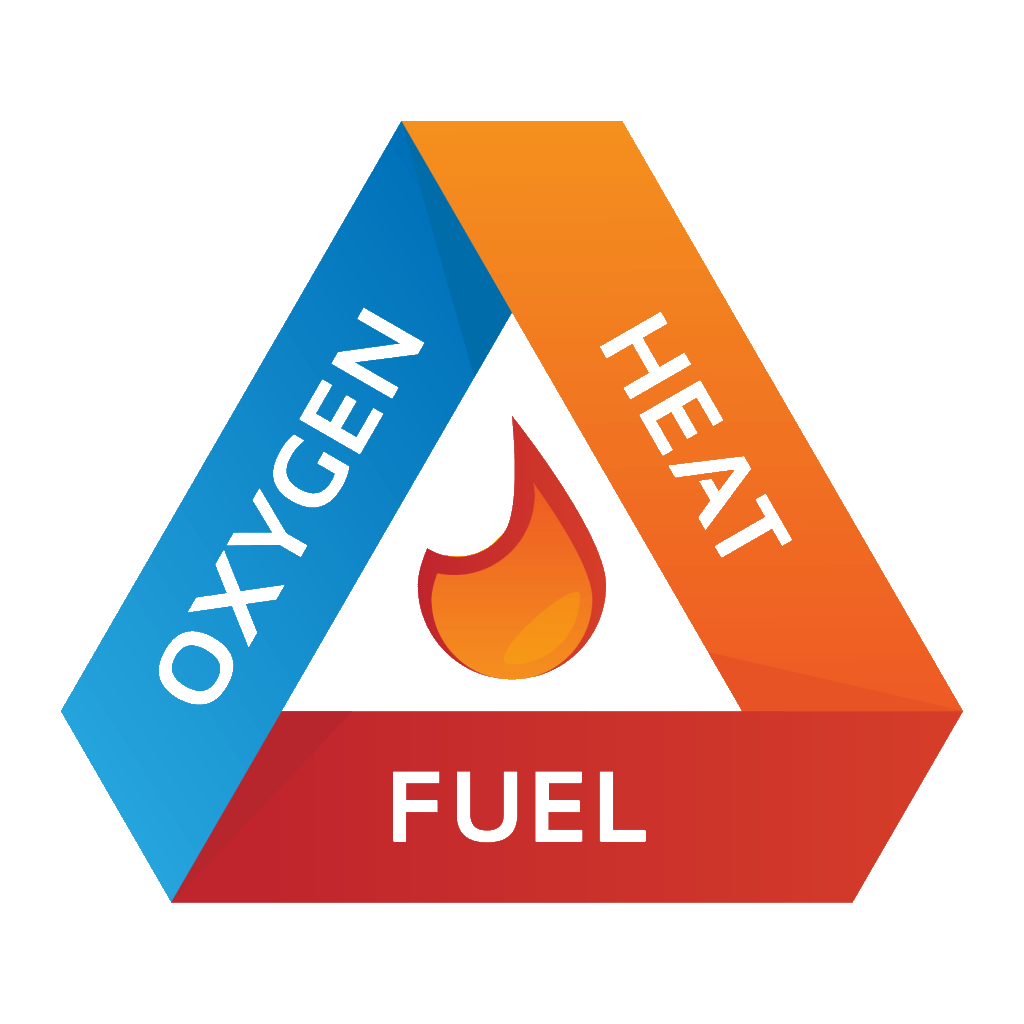
Fuel
Without any one of these components, a fire cannot start. In theory, a fire can be extinguished by removing one of these components; for example, completely covering flames with a blanket removes the oxygen and so puts out the fire
Fire classification
Fires are classified by the type(s) of fuel involved, and therefore the most appropriate extinguishing agent to use:
| Class of Fire | Fuel/Heat Source |
| Class A | Ordinary combustibles (wood, paper, fabric) |
| Class B | Flammable liquids (petrol, oil, paint) |
| Class C | Flammable gases |
| Class D | Combustible metals |
| Class F | Cooking oil or fat |
Electrical fires are not considered to constitute a fire class on their own, as electricity is a source of ignition that will feed the fire until removed. When the electrical supply has been isolated, the fire can be treated (generally) as Class A for extinguishing purposes. However, you should use a non-conducting agent on all possible occasions.
…
…